





International Baccalaureate Explained: Complete IB Guide
Overview
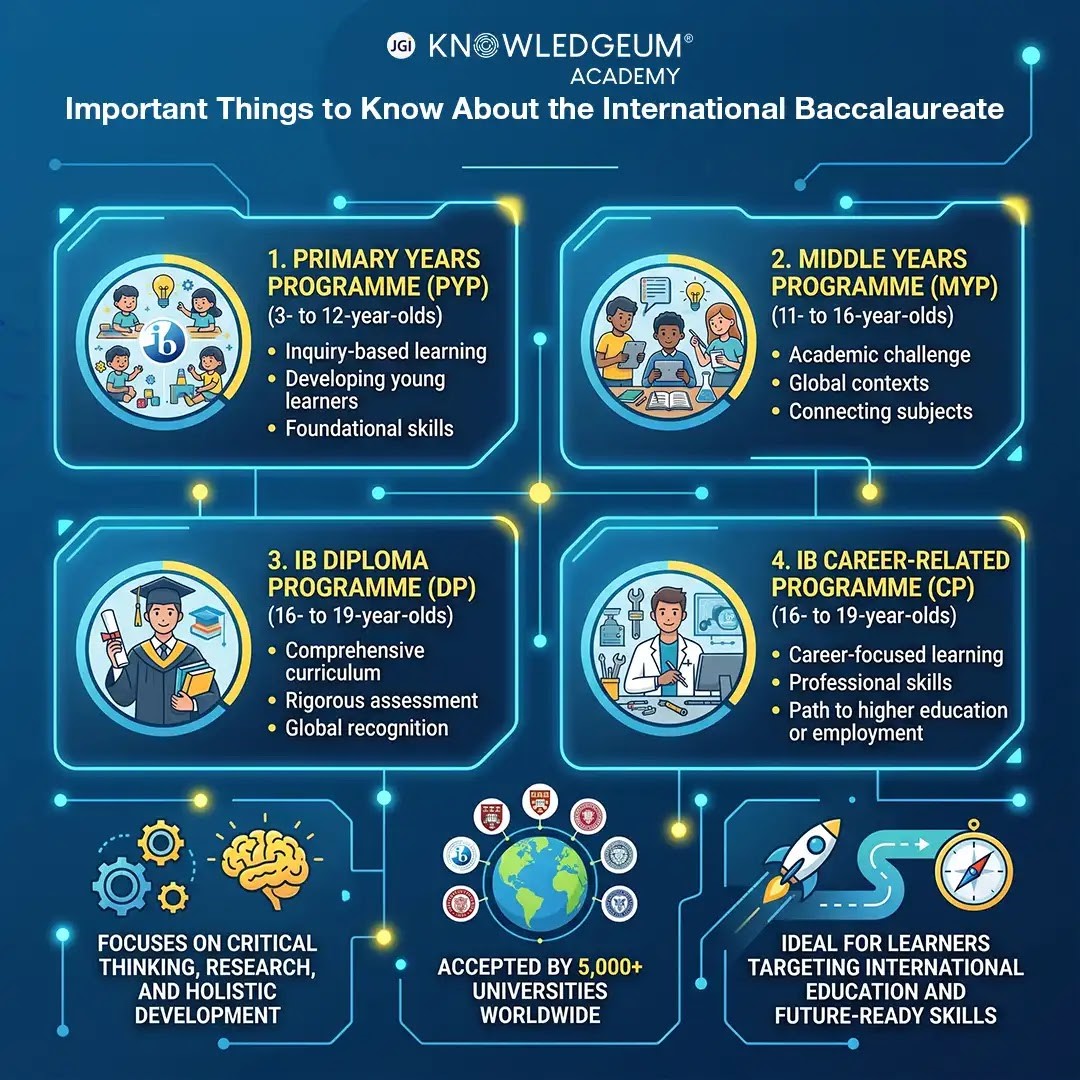
- The IB Diploma Programme (IBDP) is a globally recognised curriculum for ages 16–19
- Focuses on critical thinking, research, and holistic development
- Accepted by 5,000+ universities worldwide
- Ideal for students targeting international education and future-ready skills
- Includes core elements: TOK, EE, CAS
The International Baccalaureate (IB) curriculum is a globally recognised curriculum for ages 3–19 that builds inquiry, critical thinking, and international-mindedness through four programmes: PYP, MYP, DP and CP. Today, there are more than 5000 IB World Schools in over 150 countries. Some of the best IB schools in Bangalore follow this framework and offer the ideal learning environment. It is focused on the development of critical thinking skills, global awareness, and lifelong learning. IB is inquiry-based, where learning goes beyond textbooks. International institutions worldwide highly value IB for its rigorous standards. Unlike other conventional systems of education, IB lays emphasis on interdisciplinary studies, reflection, and independent research, which is why it is preferred by learners.
Table of Contents
- What is the International Baccalaureate?
- History and Foundation
- Global recognition
- Core Philosophy of IB
- Learner Profile
- Inquiry-Based Learning
- Introduction to IB Programmes
- Primary Years Programme (PYP)
- Middle Years programme (MYP)
- Diploma Programme (DP)
- Career-related Programme (CP)
- Benefits of Choosing IB
- IB vs CBSE vs ICSE vs Cambridge (IGCSE/A Levels): Comparison Table
- Challenges of IB
- Conclusion
- FAQs
What is the International Baccalaureate?
The International Baccalaureate (IB) is a globally standardised, inquiry-led curriculum that builds academic depth, research skills, and international mindedness.
History and Foundation
The IB organisation was founded in Geneva, Switzerland, with the purpose of offering globally recognised educational programmes. These programmes empower learners to take ownership of their academic journeys. It is a non-profit educational foundation that was established in 1968.
Global recognition
The International Baccalaureate programmes have gained great respect among top-notch universities across the globe. The learners who graduate from the IB Diploma Programme earn advanced standing or credits at various universities in the US. This reflects the high credibility of IB programmes among educational institutions.
The UK higher education outcomes study conducted in 2021 shows that IB diploma learners were significantly more likely to attend and graduate from the top 20 higher education institutions.
Core Philosophy of IB
At the heart of IB lies a philosophy that promotes curiosity, empathy, and critical thinking. This is how IB nurtures active, lifelong learners who can be empathetic, global citizens:
Learner Profile
The IB learner profile outlines ten key attributes, such as being an inquirer, a thinker, a risk-taker, a communicator, and a principled individual. These attributes take learning beyond academic success and aim to shape learners into responsible global citizens.
Inquiry-Based Learning
Instead of traditional lectures, IB emphasises learning through questioning and exploration. Learners are encouraged to investigate topics deeply, fostering independent thinking and problem-solving skills.
Introduction to IB Programmes
The IB programme is structured into four different programmes that target different age categories.
Primary Years Programme (PYP)
This programme caters to children between the ages of 3 and 12 years and focuses on comprehensive development. Subjects are covered under transdisciplinary themes.
- Cultivates curiosity and inquiry-based learning
- Enhances communication skills
- Conceptual understanding is prioritised
Middle Years Programme (MYP)
This programme targets individuals between 11-16 years and facilitates the transition from primary concepts to more advanced learning techniques.
- Fosters interdisciplinary knowledge
- Develops critical thinking
- Community projects included
Diploma Programme (DP)
The IB Diploma Programme is designed for 16- to 19-year-olds. It is the most renowned IB programme and is known for its academic rigour.
- Six subject groups covering 25+ subjects
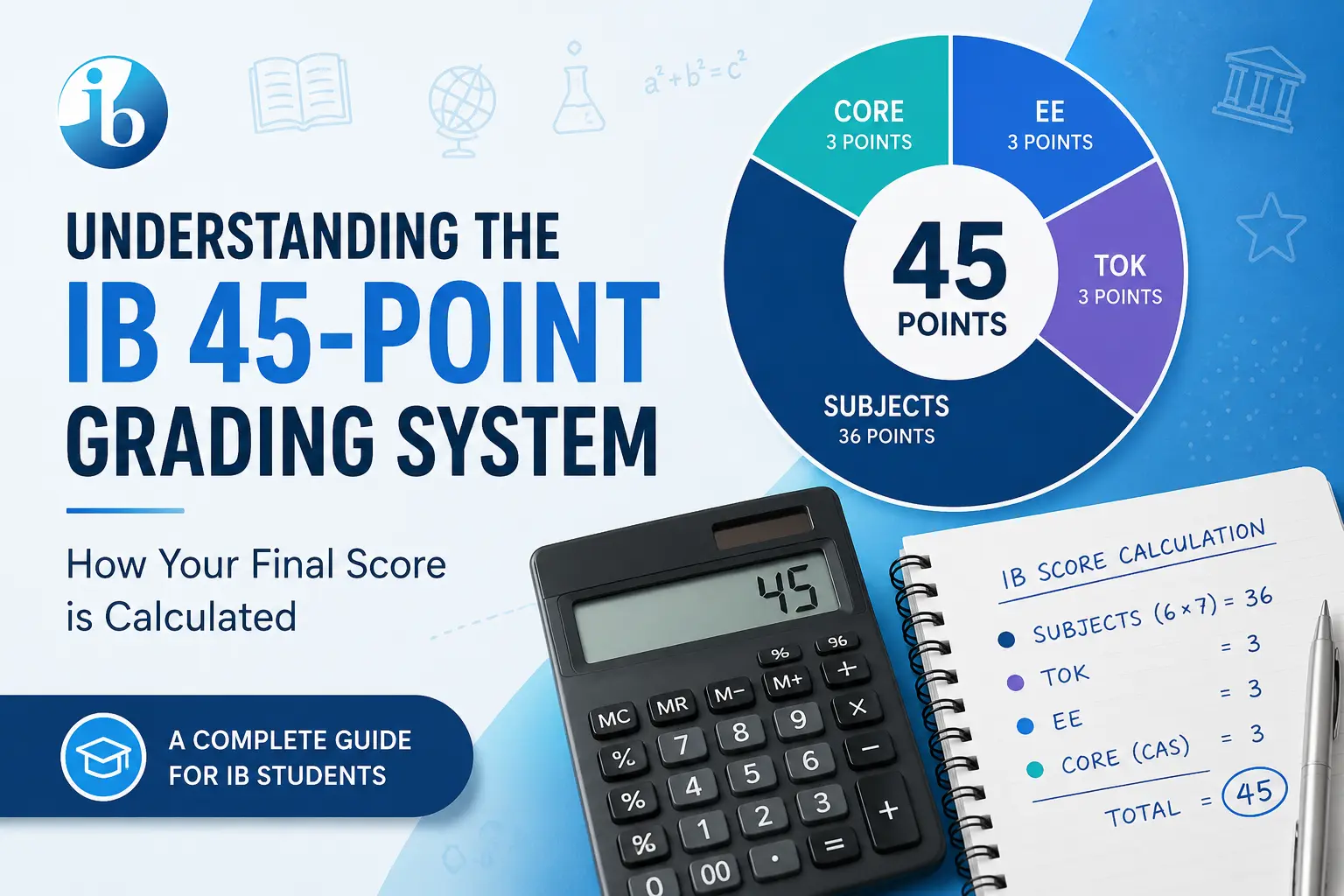
- DP core elements: TOK, EE, CAS
- Curriculum ideal for creating the university foundation
Career-related Programme (CP)
The IBCP is an educational programme that blends academic studies and career-related education. It combined IB Diploma subjects with career-related studies to develop lifelong personal and professional skills.
- Shaped by learner’s voice, choice, and ownership of education
- Nurtures personal, academic, and professional knowledge, skills and attitudes
- CP core elements: Personal and professional skills, community engagement, reflective skills, and Language and cultural studies
Benefits of Choosing IB
Choosing the International Baccalaureate (IB) offers learners a well-rounded and future-focused education. One of the IB curriculum benefits is its emphasis on reasoning and inquiry-based learning. Instead of memorising facts, learners learn how to question, analyse, and apply knowledge in real-world contexts, which builds deeper understanding.
Another major benefit is global recognition. IB qualifications are accepted by leading universities worldwide, often giving learners an edge during admissions. The curriculum is standardised internationally, ensuring consistency and high academic standards regardless of location.
IB is also concerned with holistic development. Learners participate in activities other than studying, such as being creative, physical, and doing social work in the community. This way, they can develop emotional maturity, leadership, and a sense of responsibility.
Moreover, IB provides its learners with necessary life skills. Such skills include time management, researching, and communication, since there is a lot of work involved in their education programme.
Lastly, the programme promotes international-mindedness by teaching learners to appreciate different cultures around the world. It helps them become more open-minded and successful in a global society.
IB vs CBSE vs ICSE vs Cambridge (IGCSE/A Levels): Comparison Table
| Criteria | IB | CBSE | ICSE | IGCSE/A Levels |
| Curriculum Focus | Inquiry-based, conceptual learning with global perspective | Structured, syllabus-driven with focus on core subjects | Detailed, balanced curriculum with strong emphasis on English | Flexible and subject-specific with international academic standards |
| Assessment Style | Continuous assessment and final exams include projects like Extended Essay | Primarily final board exams with some internal assessments | Mix of internal assessments and board exams | Modular exams with coursework, A Levels allow deep subject specialisation. |
| Subject Flexibility | High flexibility; students choose subjects across disciplines | Limited flexibility; predefined subject streams (Science, Commerce, Arts) | Moderate flexibility with a wide subject range | Very high flexibility; students pick subjects based on interests and career goals |
| Skill Development | Emphasis on critical thinking, research, and real-world application | Focus on theoretical knowledge and problem-solving (especially in STEM) | Strong focus on language, analytical skills, and practical knowledge | Encourages independent learning, analytical thinking, and subject depth |
| Global Recognition | Widely recognized by universities worldwide | Recognized in India and accepted by many international institutions | Recognized in India and abroad, but less globally aligned than IB/Cambridge | Highly recognized globally, especially in UK, US, and Commonwealth countries |
Challenges of IB
Rigor in Academics: The IB curriculum is notorious for its rigor. The learners need to juggle several things at once, including various subjects, internal assessment papers, and compulsory elements of the IB diploma course. This can prove very stressful for many learners.
Pressure of Time Management: Learners are supposed to complete projects, essays, and various other papers regularly. learners must learn the art of time management in order to be successful in their academic life.
Rigorous Assessment System: There is both internal and external assessment in IB, which requires continuous effort during the entire course. Unlike other systems that depend largely on terminal exams, IB necessitates constant performance.
Psychological and Emotional Strain: The pressure of academics and activities can result in exhaustion if proper attention is not paid. It is essential for learners to have a good support system for balancing these aspects.
Conclusion
IB is unique because it is a revolutionary education system that does not merely cater to examinations but to life itself. As an inquiry-based learning approach, it aims to develop well-rounded individuals who can handle any situation in real life. Though one has to devote time and effort, IB provides great advantages in the form of knowledge, experience, and growth.
For more information, consider taking a campus tour of the best IB schools in Bangalore, like Knowledgeum Academy. It will help you understand the IB learning environment better and see how it can be the right fit.
Which IB skills do you think are beneficial on a personal as well as professional level? Let us know in the comments section.






















0 Comments