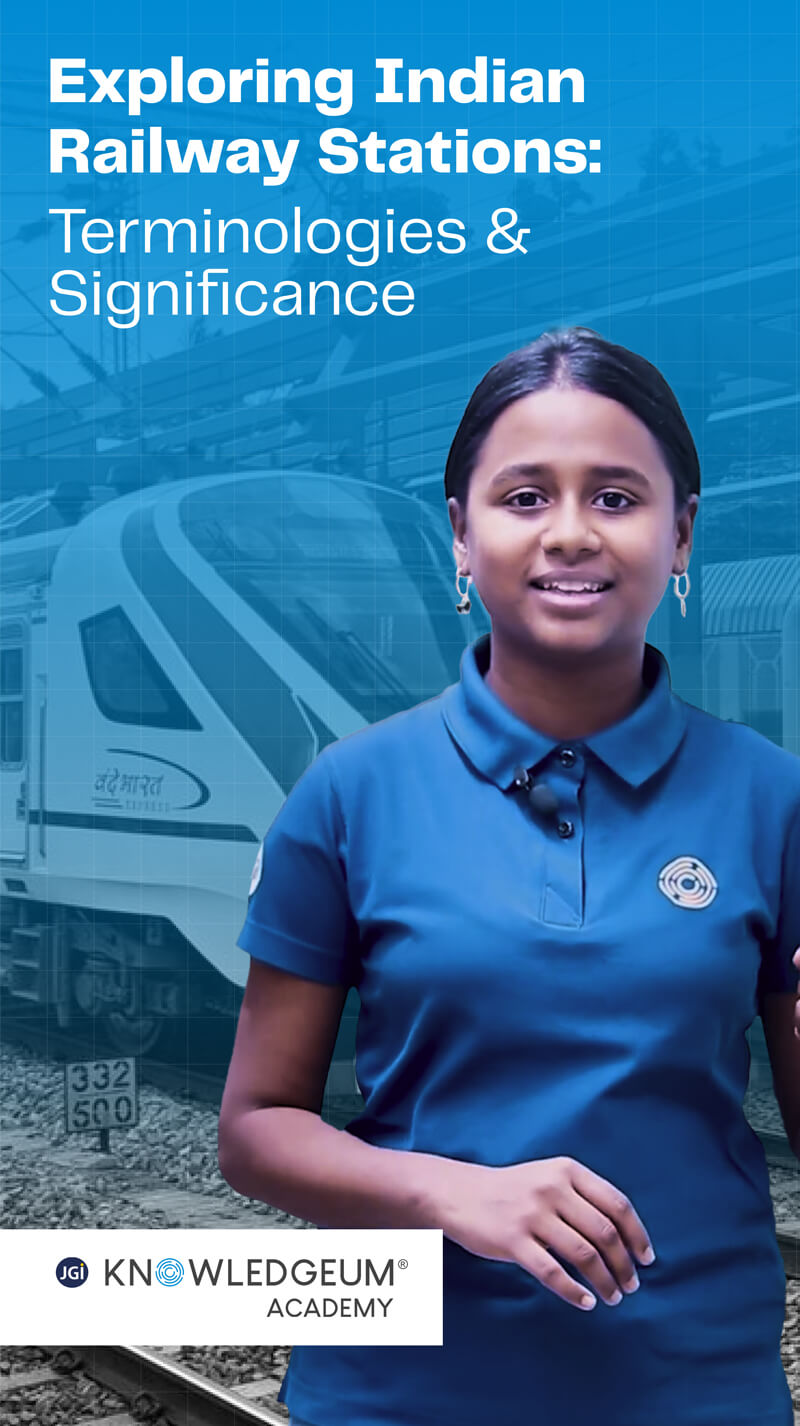

Exploring Indian Railway Stations: Terminologies & Significance
Summary
Explore the significance of Indian railway stations, including junctions, terminals, central stations, cantonment stations, and road stations.
Highlights
🚉 Junction Stations: Where multiple railway lines intersect.
🚂 Terminal Stations: Starting or ending points of train routes.
🏙️ Central Stations: Pivotal hubs for commuters and cargo.
🏛️ Historical Stations: Mumbai Central and Chennai Central’s colonial legacy.
🪖 Cantonment Stations: Serving military personnel near bases.
🛣️ Road Stations: Transportation hubs near highways.
🎥 Informative Overview: Insightful exploration of railway terminologies.
Key Insights
🌐 Junction Stations are critical for efficient travel, linking various routes and enhancing connectivity for passengers.
🏁 Terminal Stations play a vital role in the railway network, acting as crucial nodes for arrivals and departures, shaping travel patterns.
🚆 Central Stations serve not only as transport hubs but also as cultural landmarks, reflecting urban identity and historical significance.
📜 Historical Stations like Mumbai Central and Chennai Central highlight the rich heritage of Indian Railways, showcasing architectural marvels from the colonial period.
🎖️ Cantonment Stations cater specifically to military needs, ensuring that personnel and families have seamless access to travel, reflecting national service.
🚦 Road Stations provide an integrated transport solution, accommodating commuters traveling by road, and enhancing overall accessibility.
🎉 This overview offers a deeper understanding of the diverse roles and importance of railway stations in India’s transportation landscape.
Unveiling the Magic of Barcodes: How They Revolutionized Retail
Summary
Barcodes, introduced in the 1970s, revolutionized inventory management and checkout processes in retail, improving efficiency and customer satisfaction.
Highlights
🛒 Barcodes are essential for nearly every product.
⏳ Introduced in the early 1970s to improve inventory management.
📦 Automates checkout, reducing purchase chaos.
💡 Contains unique parameters like product name and price.
📊 Enhances accuracy in managing inventory.
🌐 Streamlines processes across various industries.
🎉 Improves customer satisfaction through efficiency.
Key Insights
🔗 The simplicity of barcodes belies their complexity, reflecting a language that machines understand, crucial for modern commerce.
🔍 Barcodes encode essential product information, allowing quick access and processing, crucial for modern retail operations.
⏩ Their introduction marked a significant shift from manual scanning to automation, reducing time and labor costs significantly.
💻 The technology behind barcodes involves scanners that interpret light reflection, showcasing the intersection of technology and everyday shopping experiences.
📈 Efficient inventory management via barcodes leads to better stock control, reducing waste and improving profitability for retailers.
🌎 Barcodes have transcended retail, finding applications in healthcare, logistics, and ticketing, proving their versatility.
🙌 Customer experience is enhanced as barcodes reduce wait times and errors at checkout, leading to greater satisfaction.
From Yellow to Orange: The Stories Behind Indian Milestone Colors
Summary
Indian milestones feature vibrant colors, each representing different road types, highlighting cultural and historical significance in connectivity and development.
Highlights
🟡 Yellow band: Represents National highways, connecting cities and states.
🟢 Green band: Signifies State highways, aiding regional development.
⚫ Black band: Marks District roads, linking neighborhoods and urban infrastructure.
🟠 Orange band: Indicates Village roads, ensuring local accessibility.
🌍 Colors reflect India’s diverse landscapes and connectivity.
📈 Milestones tell a unique story of progress and unity.
🚦 Understanding these colors enhances appreciation for Indian infrastructure.
Key Insights
🛣️ National Highways (Yellow): These roads are crucial for inter-state connectivity, promoting economic growth and cultural exchange across vast distances.
🌳 State Highways (Green): They facilitate movement within states, playing a key role in regional development and supporting local economies.
🏙️ District Roads (Black): Essential for urban infrastructure, these roads connect different neighborhoods, enhancing accessibility and daily commutes for residents.
🚜 Village Roads (Orange): Vital for rural connectivity, these roads ensure that development reaches the most remote areas, fostering inclusivity and growth.
🎨 Color Significance: Each color is a visual representation of the type of road, helping travelers easily identify their surroundings and navigate better.
📖 Cultural Narrative: The colors of the milestones reflect India’s diverse cultural landscape, telling stories of connectivity and infrastructure evolution.
📊 Development Indicator: The presence of these roads and their respective colors indicates the level of development and connectivity in various regions of India.
The Power of Trademarks: Driving Creativity and Fair Competition
Summary
Trademarks are essential for protecting brand identity and reputation, ensuring authenticity and fair competition in today’s market.
Highlights
🛡️ Trademarks guard business identity and branding.
🏺 Historical roots trace back to craftsmen’s symbols.
💡 They act as the DNA of branding and innovation.
🔒 Exclusive rights prevent exploitation of reputation.
✔️ They incentivize creativity and originality.
⚖️ Promote fair competition among businesses.
🛍️ Ensure consumers receive genuine products.
Key Insights
🛡️ Brand Protection: Trademarks safeguard a brand’s identity, ensuring that consumers can trust the quality and authenticity of products. This trust is foundational for customer loyalty and business success.
🏺 Historical Significance: The use of trademarks dates back to artisans who marked their goods, emphasizing quality and authenticity, which highlights the longstanding importance of branding in commerce.
💡 Innovation Catalyst: Trademarks serve as a framework for innovation, allowing brands to build upon their unique identities and develop new products without fear of imitation.
🔒 Exclusive Rights: By securing trademarks, companies protect their hard-earned reputations, preventing others from misleading consumers and ensuring that the brand’s promise is upheld.
✔️ Creativity Incentive: Trademarks encourage creativity, motivating businesses to develop unique products and services, which ultimately benefits consumers with diverse options.
⚖️ Fair Competition: Trademarks level the playing field by ensuring that all businesses compete on their merits, fostering an environment where quality and originality thrive.
🛍️ Consumer Assurance: Trademarks guarantee that consumers receive the genuine article, enhancing their purchasing experience and reinforcing brand loyalty.