The field of education has drastically changed its course in the last few decades. The students and the teachers no longer rely on just the age-old method of rote learning through textbooks and the traditional chalk and talk method. In contemporary times, the teaching and learning methods have also incorporated practical learning based on social interactions, experiments, discussions, open debates, etc.
An IB education aims to transform students and schools as they learn, through active cycles of inquiry, action, and, reflection. The teachers equip and support students as they develop the approaches to learning that they require – for both academic and personal success.
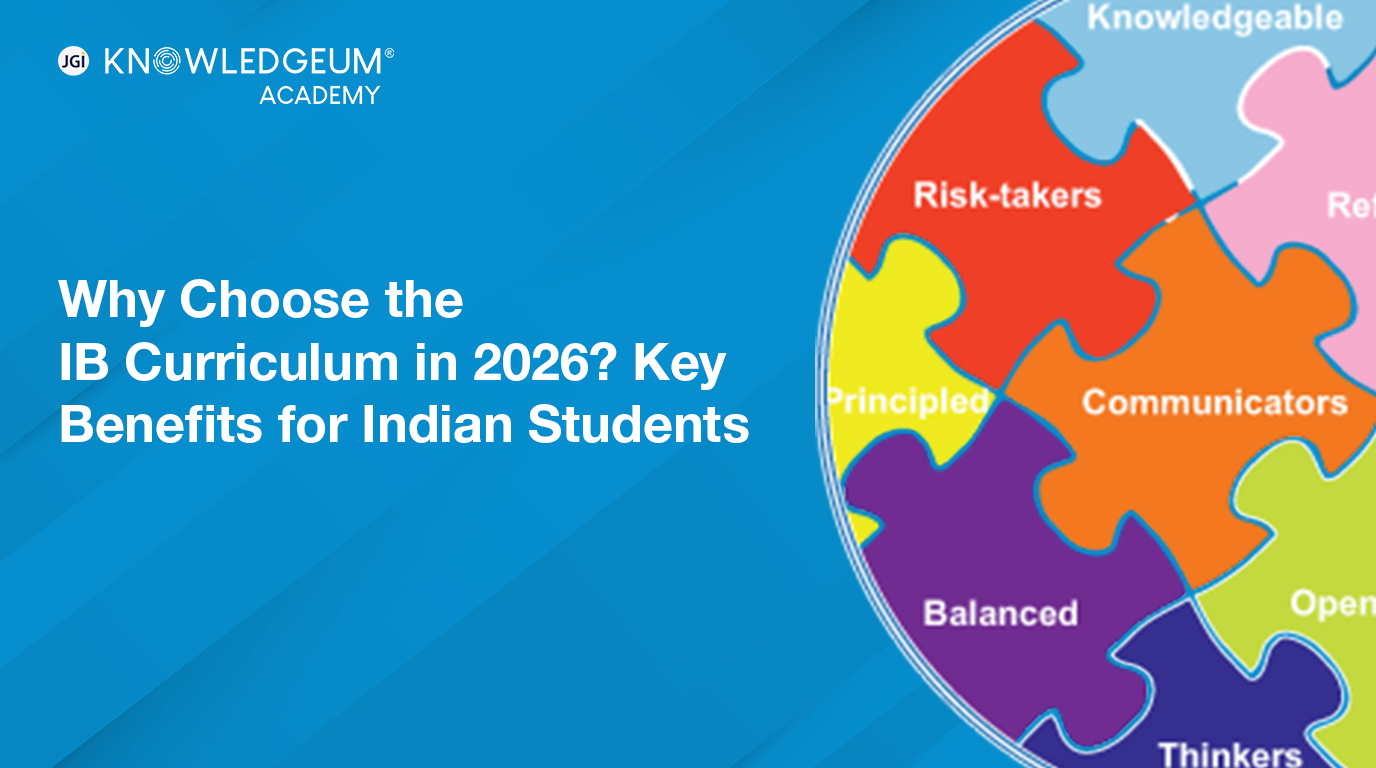
The teaching method and curriculum are learner-centered and strive to help students become knowledgeable, principled, caring, open-minded thinkers by promoting self-research. Students steer their learning by collaborating to conduct an inquiry into real-life issues.
Teaching and learning in IB celebrate the various ways people work together to establish meaning and make sense of the world. An IB education empowers young people for a lifetime of independent learning and also learning by collaboration.
Throughout all IB programmes, students develop approaches to learning skills and the attributes of IB learner profile. The learner is positively challenged to think critically and to learn in a flexible environment crossing disciplinary, cultural, and national boundaries.
Students take responsibility for their own learning and understand how knowledge itself is constructed, underpinned by the unique Theory of Knowledge (ToK) course.
The programme also encourages students to be active in their communities and to expand their learning beyond academics. IB programmes offer students access to a wide and balanced range of academic studies and learning experiences. They promote conceptual learning, focusing on powerful organizing ideas that are relevant across subject areas and that help to integrate learning and add uniformity to the curriculum.
Why self-led learning?
IB is trying to break the mould and propel schooling to focus on challenging learning environments and direct attention on the individual students to create lifelong learners. It is interesting, especially in an international school setting. With schools including different cultures, academic levels, beliefs, backgrounds, etc., there is no longer a one size fits all approach to the school environment, let alone learning. Subsequently, personalized learning is required to meet specific individual needs and encourage students to take more responsibility in preparing them for life after school.
IB curriculum is thoroughly practical, based on, and driven by application-based research. Its objective is to nurture the students in a holistic way rather than only focusing on scoring good scores. Hence, IBDP stimulates the students through analytical, logical reasoning, and linguistic skills, which can provide them a great advantage on examinations like the SAT and GRE.
It is also beneficial in terms of profile building, as there is a heavy emphasis on extracurricular activities and social interaction. This gives the students an advantage while applying to international universities. So, for those seeking global skill development, flexibility, and an innovative educational approach to learning, IB is a great choice!








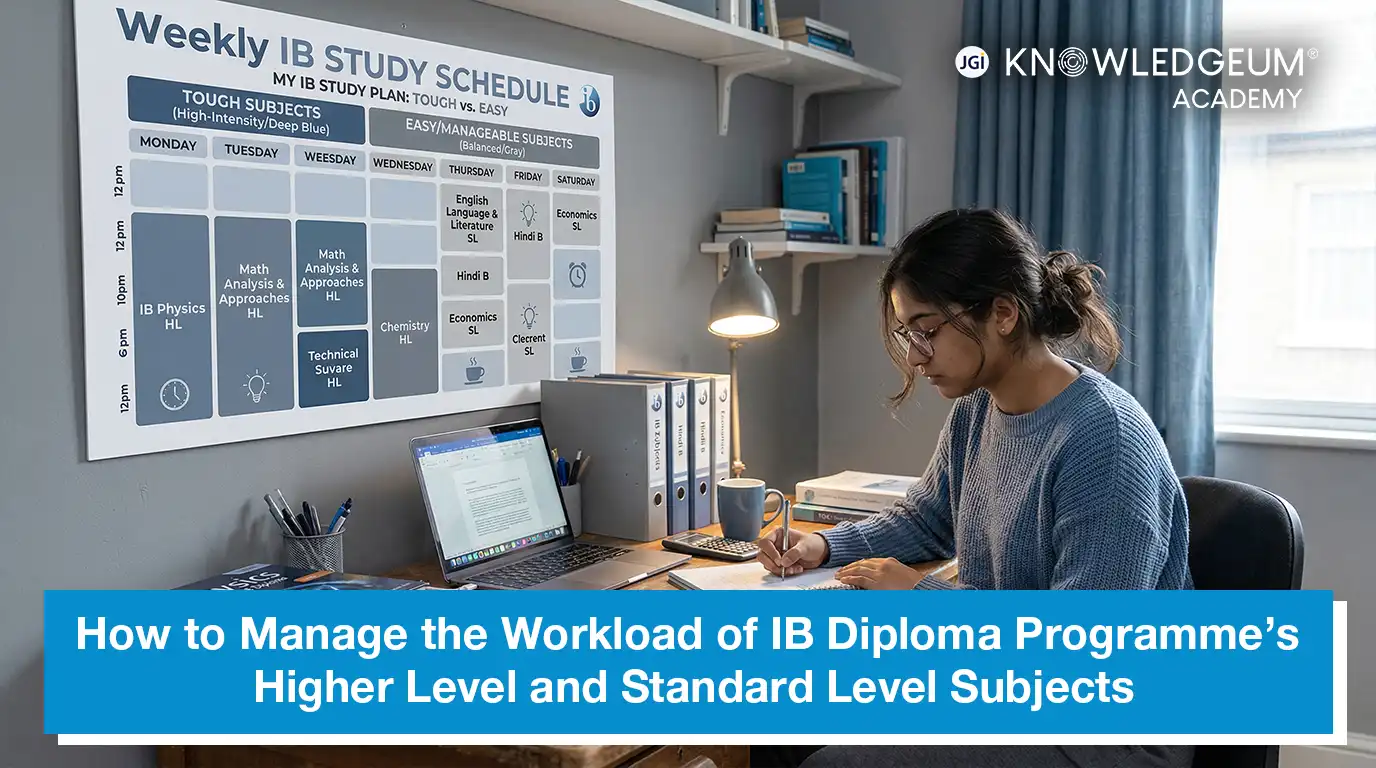
How to Manage the Workload of IB Diploma Programme Higher Level and Standard Level Subjects



 Brochure


Address
No.10, (old 271/A), 1st Main Road


Quick links
© Knowledgeum



 Knowledgeum Experience