The term "transdisciplinary" was first used in the 1970s, which goes beyond instructing over disciplines by using certain concepts and issues across different courses.
The programme is based on real-world problems that provide students with real-world experience. There is a need to integrate multiple perspectives on relevant issue disciplines (and sectors) to connect new knowledge and a deeper understanding of real-life experiences.
Transdisciplinary teachers created a conscious and deliberate effort to rewrite the central idea from a transdisciplinary point of view.
How might we learn more about what lies at the core of a subject by examining it through other disciplines? By discussing various ways to enhance or express a student's understanding of a subject, a group of subject specialist teachers reflected on this unit and agreed on patterns as one way to do this.
We identified several aspects of conceptual understanding and learning outcomes to be developed within this unit of inquiry through the subject scope and sequence documents. Students can utilize the following approaches to learning skills to develop their inquiry skills: observation, analysis, and communication.
Analysis of stories is conducted to determine if patterns are followed, and then created patterns in poetry are identified and evaluated. Poetry is written, and rhymes and patterns are used to spell new words. Students are encouraged to recite poems to improve their listening and speaking skills.
Students investigate how numbers, shapes, and colours can be increased, decreased, or repeated. To better understand how patterns occur and can repeat in everyday situations, mathematicians explore the laws of patterns.
Students also examine natural patterns such as spirals, packing, meandering, branching, and explosions. As a result, they develop their observation skills and become more sensitive to living things and the environment.
Social studies:
The following elements are taken into account:
Physical Education:
To further develop their understanding of how critical thinking and teamwork can aid a group in achieving its objectives, students identify, create and apply various attacking and defending patterns in games.
Music:
Students use voice and percussion instruments to create rhythms and melodies. They approach their classmates, responding by keeping the beat to demonstrate how the artist and the audience create a relationship. Assessments determined that students demonstrated an understanding that the creative process is a cooperative one.
Six major concepts
A study of the rights and responsibilities associated with limited resources and sharing them with other living things and other people; communities and relationships within and between communities; equal opportunities; and peace and conflict resolution are all explored.






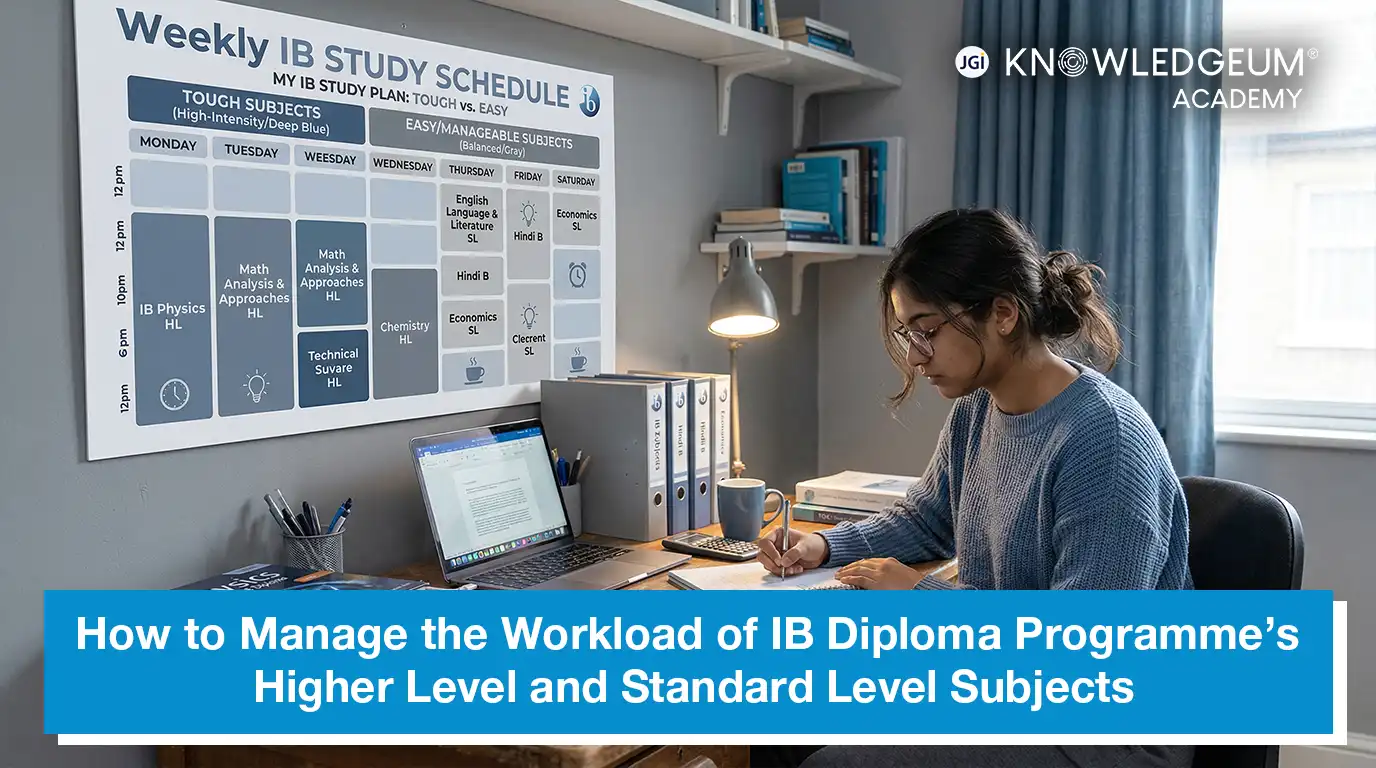
How to Manage the Workload of IB Diploma Programme Higher Level and Standard Level Subjects


 Brochure


Address
No.10, (old 271/A), 1st Main Road


Quick links
© Knowledgeum


 Knowledgeum Experience