Apply Now
14-05-2025

Oldest Civilizations in the World 

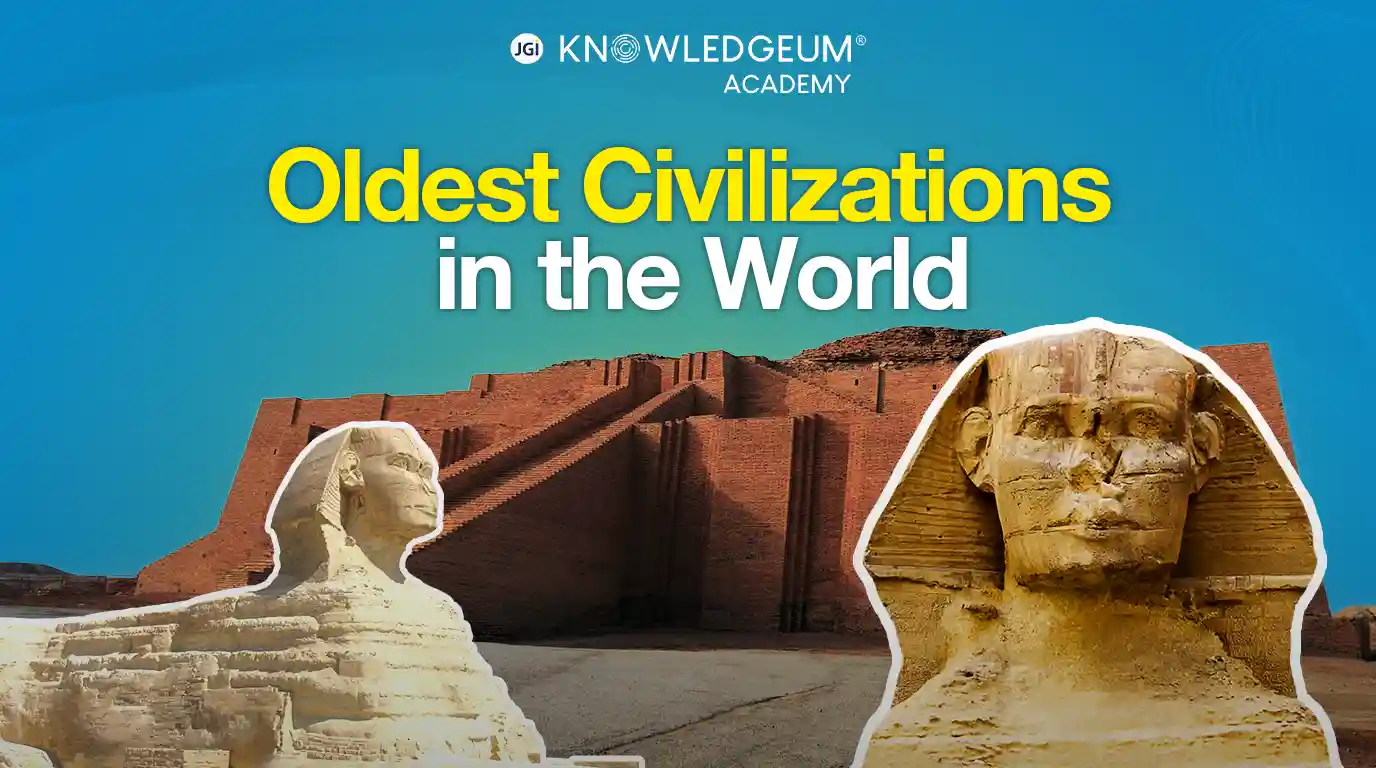
The ancient Sumerians of Mesopotamia, widely recognized as the oldest civilization in the world, emerged around 4000 BCE in what is now Iraq. By 2500 BCE, cities like Ur had developed complex social structures with defined roles for priests, merchants, artisans, and farmers. Located between the Tigris and Euphrates rivers, Mesopotamia—often called the cradle of civilization—was a hub of innovation. The Sumerians pioneered cuneiform writing, built the first known urban city-states, and made major advances in mathematics, astronomy, and governance. Simultaneously, Ancient Egypt, one of the first great river civilizations, began constructing its iconic pyramids in the 3rd millennium BCE, showcasing early mastery in architecture, engineering, and centralized monarchy along the Nile River.

 Civilizations in the World - Sumerian Civilization First City Builders

Region: Southern Mesopotamia (Iraq)

Known For: World's first cities (Uruk, Ur), cuneiform writing, wheel invention, Code of Ur-Nammu

Fast Fact: Invented the first known writing system (Cuneiform)

Top 10 Oldest Civilizations 

Civilization Name Location Timeline (Approx.)
Sumerian Civilization Mesopotamia (Iraq) 4500–1900 BCE
Ancient Egyptian Nile Valley (Egypt) 3100–332 BCE
Indus Valley South Asia (Pakistan, India) 3300–1300 BCE
Chinese Civilization Yellow River, China 2070 BCE–present
Minoan Civilization Crete, Greece 3000–1100 BCE
Mesopotamian (Babylonian) Iraq, Syria 1894–539 BCE
Persian (Achaemenid Empire) Iran and surrounding areas 550–330 BCE
Hittite Empire Anatolia (Modern Turkey) 1600–1178 BCE
Olmec Civilization Mesoamerica (Mexico) 1600–400 BCE
Norte Chico Civilization Coastal Peru 3500–1800 BCE

Mesopotamian Civilization – Code and Cosmos

  • Region: Tigris-Euphrates Valley
  • Known For: Babylon, Hammurabi’s Code, astrology, ziggurats
  • Fast Fact: Developed a base-60 number system used in timekeeping today

Ancient Egyptian Civilization – Pyramid Masters

  • Region: Nile Valley (Egypt)
  • Known For: Pyramids of Giza, mummification, hieroglyphics, centralized monarchy
  • Fast Fact: Had one of the most stable dynastic rules in human history (30+ dynasties)

Indus Valley Civilization – Urban Engineering Pioneers

  • Region: Present-day Pakistan & India
  • Known For: Urban planning, sanitation, undeciphered script, grid-based cities like Mohenjo-Daro
  • Fast Fact: Among the earliest societies to implement municipal sewage systems

Chinese Civilization

  • Region: Central and Eastern China
  • Known For: Dynastic cycles (Xia, Shang, Zhou), philosophy (Confucianism, Taoism), paper and compass
  • Fast Fact: The only ancient civilization that has survived continuously till modern times

Minoan Civilization – Mediterranean Traders

  • Region: Crete, Greece
  • Known For: Advanced maritime trade, art, the palace of Knossos, Linear A script
  • Fast Fact: Possibly the first European civilization

Mesopotamian Civilization – Code and Cosmos

  • Region: Tigris-Euphrates Valley
  • Known For: Babylon, Hammurabi’s Code, astrology, ziggurats
  • Fast Fact: Developed a base-60 number system used in timekeeping today

Persian Civilization – Imperial Governance Innovators

  • Region: Iran and the Middle East
  • Known For: Royal Road, Darius the Great, Zoroastrianism, tolerance policies
  • Fast Fact: One of the first empires to practice religious freedom

Hittite Empire – Iron Age Pioneers

  • Region: Anatolia (Turkey)
  • Known For: Iron weaponry, chariot warfare, treaties (Treaty of Kadesh)
  • Fast Fact: Among the first to smelt and forge iron

Olmec Civilization – Mesoamerican Forerunners

  • Region: Southern Mexico
  • Known For: Colossal stone heads, Mesoamerican ballgame, early calendars
  • Fast Fact: Considered the "mother culture" of Mesoamerica

Norte Chico Civilization – Silent Builders of Peru

  • Region: Supe Valley, Peru
  • Known For: Monumental architecture, pre-ceramic society, quipu (possible proto-writing)
  • Fast Fact: Built pyramids 1,000 years before Egyptians

The ancient Sumerians of Mesopotamia, widely recognized as the oldest civilization in the world, emerged around 4000 BCE in what is now Iraq. By 2500 BCE, cities like Ur had developed complex social structures with defined roles for priests, merchants, artisans, and farmers. Located between the Tigris and Euphrates rivers, Mesopotamia—often called the cradle of civilization—was a hub of innovation. The Sumerians pioneered cuneiform writing, built the first known urban city-states, and made major advances in mathematics, astronomy, and governance. Simultaneously, Ancient Egypt, one of the first great river civilizations, began constructing its iconic pyramids in the 3rd millennium BCE, showcasing early mastery in architecture, engineering, and centralized monarchy along the Nile River.

Oldest Civilizations in the World - Sumerian Civilization First City Builders

Region: Southern Mesopotamia (Iraq)

Known For: World's first cities (Uruk, Ur), cuneiform writing, wheel invention, Code of Ur-Nammu

Fast Fact: Invented the first known writing system (Cuneiform)

Top 10 Oldest Civilizations in the World 

Civilization NameLocationTimeline (Approx.)
Sumerian CivilizationMesopotamia (Iraq)4500–1900 BCE
Ancient EgyptianNile Valley (Egypt)3100–332 BCE
Indus ValleySouth Asia (Pakistan, India)3300–1300 BCE
Chinese CivilizationYellow River, China2070 BCE–present
Minoan CivilizationCrete, Greece3000–1100 BCE
Mesopotamian (Babylonian)Iraq, Syria1894–539 BCE
Persian (Achaemenid Empire)Iran and surrounding areas550–330 BCE
Hittite EmpireAnatolia (Modern Turkey)1600–1178 BCE
Olmec CivilizationMesoamerica (Mexico)1600–400 BCE
Norte Chico CivilizationCoastal Peru3500–1800 BCE

Mesopotamian Civilization – Code and Cosmos

  • Region: Tigris-Euphrates Valley
  • Known For: Babylon, Hammurabi’s Code, astrology, ziggurats
  • Fast Fact: Developed a base-60 number system used in timekeeping today

Ancient Egyptian Civilization – Pyramid Masters

  • Region: Nile Valley (Egypt)
  • Known For: Pyramids of Giza, mummification, hieroglyphics, centralized monarchy
  • Fast Fact: Had one of the most stable dynastic rules in human history (30+ dynasties)

Indus Valley Civilization – Urban Engineering Pioneers

  • Region: Present-day Pakistan & India
  • Known For: Urban planning, sanitation, undeciphered script, grid-based cities like Mohenjo-Daro
  • Fast Fact: Among the earliest societies to implement municipal sewage systems

Chinese Civilization

  • Region: Central and Eastern China
  • Known For: Dynastic cycles (Xia, Shang, Zhou), philosophy (Confucianism, Taoism), paper and compass
  • Fast Fact: The only ancient civilization that has survived continuously till modern times

Minoan Civilization – Mediterranean Traders

  • Region: Crete, Greece
  • Known For: Advanced maritime trade, art, the palace of Knossos, Linear A script
  • Fast Fact: Possibly the first European civilization

Mesopotamian Civilization – Code and Cosmos

  • Region: Tigris-Euphrates Valley
  • Known For: Babylon, Hammurabi’s Code, astrology, ziggurats
  • Fast Fact: Developed a base-60 number system used in timekeeping today

Persian Civilization – Imperial Governance Innovators

  • Region: Iran and the Middle East
  • Known For: Royal Road, Darius the Great, Zoroastrianism, tolerance policies
  • Fast Fact: One of the first empires to practice religious freedom

Hittite Empire – Iron Age Pioneers

  • Region: Anatolia (Turkey)
  • Known For: Iron weaponry, chariot warfare, treaties (Treaty of Kadesh)
  • Fast Fact: Among the first to smelt and forge iron

Olmec Civilization – Mesoamerican Forerunners

  • Region: Southern Mexico
  • Known For: Colossal stone heads, Mesoamerican ballgame, early calendars
  • Fast Fact: Considered the "mother culture" of Mesoamerica

Norte Chico Civilization – Silent Builders of Peru

  • Region: Supe Valley, Peru
  • Known For: Monumental architecture, pre-ceramic society, quipu (possible proto-writing)
  • Fast Fact: Built pyramids 1,000 years before Egyptians

Frequently Asked Questions (FAQs)

The Sumerian civilization is widely considered the first, dating back to 4500 BCE in Mesopotamia.

China, with continuous cultural and political lineage since around 2070 BCE.

Through archaeological digs, ancient texts, and carbon dating of artifacts.

Yes, trade routes like the Silk Road and maritime exchanges linked several ancient cultures.

Main causes include climate change, wars, invasions, and internal political instability.

Absolutely—governance, language roots, religious practices, and architectural styles have direct links to modern life.



Testimonials


Latest Blogs

IB Education System in India – Everything You Need to Know

Why Choose the IB Curriculum in 2026? Key Benefits for Indian Students

Top Scholarships for IB Students in India – 2026 Opportunities

How to Manage the Workload of IB Diploma Programme Higher Level and Standard Level Subjects

How to Choose the Best IB School in Bangalore


Knowledgeumites


Enquire
Now
Brochure
logo logo logo

© Knowledgeum

News
IBDP Results 2025: A Journey of Growth, Discovery, and Achievement
Admissions 2025
A Transformative Journey of Learning and Growth
04-03-2025
The Student Council of Knowledgeum Academy
Applications Invited for
Grade 11 & 12
Event
Knowledgeum Academy Shines at JNMUN IX
17th July 2025
Conexión
June 2025 (Volume 4, Issue 6)
International Student
Kommunique
Edition 1
News
IB Subjects for Engineering: A Guide to Success
News
IB Subjects for Pursuing Medicine in the USA
News
Does Harvard Accept IB Students? A Guide to IB and Harvard Admissions
IBDP 2025 Success Rate
90%
Highest Grade Achieved
41/45
School Average Score
32/45
Knowledgeum Knowledgeum Experience