The International Baccalaureate (IB) is an international education system designed for learners aged 3 to 19. According to the official website of the IBO, there are over 250 IB World Schools in India (approximate, subject to change) that offer one or more IB programmes. The IB schools in India offer the Primary Years Programme (PYP), Middle Years Programme (MYP), IB Diploma Programme (IBDP), and Career-related Programme (CP). The IB curriculum promotes conceptual learning, nurturing critical thinking and research skills in learners. Indian families recognise that IB education creates a strong foundation from a young age, preparing learners for international academic challenges. This article covers the details of the IB education system in India, including its structure and benefits.
The International Baccalaureate (IB) is a global education framework that develops well-rounded learners through inquiry-based learning, real-world application, and continuous assessment.
At the core of IB is a strong focus on inquiry-based learning. This means that learners are encouraged to think, explore, and make connections between different subjects, rather than just concentrating on learning facts. This ensures the environment of curiosity in the classroom, where learners are encouraged to question, analyse, and explore ideas independently.
Today, according to the official IBO data, over 160 countries offer one or more IB programmes, either individually or as part of the international education continuum.
The IBO works with different governments, schools, and international organisations to structure the curriculum so that it adheres to challenging international academic standards and assessments.
The Primary Years Programme is for learners between the ages of 3 and 12, focused on developing curiosity through inquiry-based learning. The programme helps children explore real-world concepts through integrated subjects from a young age.
The Middle Years Programme caters to learners aged 11 to 16 years, creating a link between primary education and complex academic concepts. This five-year programme has eight subject groups and can be implemented in a two-, three-, or four-year format as well.
The IB Diploma Programme is an advanced pre-university curriculum designed for 16- to 19-year-old learners. It emphasises academic rigour, research, and a well-rounded education. The DP core elements include Theory of Knowledge (TOK), Extended Essay (EE), and Creativity, Activity, Service (CAS).
The IB Career-related Programme is meant for learners aged 16 to 19 years old. It blends the IBDP curriculum with career-related studies. This programme is best for learners seeking higher education opportunities aligned with career readiness.
IB schools in India are mostly located in metropolitan cities such as Bangalore, Mumbai, Delhi NCR, Hyderabad, Pune, and Chennai. The faster infrastructure development and encouraging academic environment of these cities make them ideal for implementing an IB curriculum.
Some of the top IB schools in Bangalore and other cities have experienced more parents seeking international education and global mobility in the last decade. This demand reflects the growing trend of the IB education system in India.
The IB education stands out for its emphasis on skills and conceptual understanding, as CBSE and ICSE follow more of a structured academic content.
| Feature | IB | CBSE/ICSE |
| Learning Approach | Inquiry-based | Structured |
| Assessment | Continuous + Exams | Exam-focused |
| Curriculum Scope | International | Mostly National |
| Skill Focus | Critical thinking | Knowledge-based |
| Flexibility | High | Moderate |
IB learners develop critical thinking, research, and communication skills. These skills create a strong framework for those who want to pursue challenging academic programmes at university.
The IB, recognised by over 160 countries, opens doors to top universities at a global stage. The IB curriculum also helps learners develop international-mindedness. This contributes towards making them global citizens with cultural awareness who can adapt to international environments.
The IB curriculum is known for being quite challenging. The learners are required to manage a number of assignments, projects, and extracurricular activities simultaneously.
Another factor that needs to be taken into consideration is that the IB education system is relatively expensive. It is usually pricier than other traditional boards. However, IB schools in India, like Knowledgeum Academy, offer financial assistance in the form of a Founder's Scholarship. In addition, the inquiry-based approach may be difficult for learners who are used to rote memorisation.
The IB schools in India adhere to the global IBO guidelines and have IB-trained educators. This approach ensures there is quality and consistency maintained, no matter the location. The holistic development and future-ready skills help learners be prepared for global academic requirements. Instead of rote memorisation, the conceptual clarity that comes with IB is a necessity in today’s world.
The demand for IB education focused on global, skill-based learning is rising in India. While the IB system is accompanied by challenges such as higher costs and academic demands, the benefits of global recognition and skill learning make it an attractive option.
It is recommended to visit the best IB schools in Bangalore, like Knowledgeum Academy, to explore the well-designed campus. Such visits are also helpful in understanding the learning environment and how the IB curriculum is handled.
How do you think the IB education system benefits you, and why do you think that is important? Share your thoughts in the comments section.
Yes, IB is recognised by universities in India as equivalent to the grade 12 (10+2) qualification.
IB focuses on inquiry-based learning and critical thinking, while CBSE is more structured and exam-orientated.
IB is best suited for learners who are comfortable with independent learning and academic rigour.
You can verify a school’s authorisation status on the official IB website.
There are currently over 250 IB World Schools in India, according to the official IB website. These schools are mainly located in cities like Bangalore, Mumbai, Delhi NCR, Chennai, and Pune.








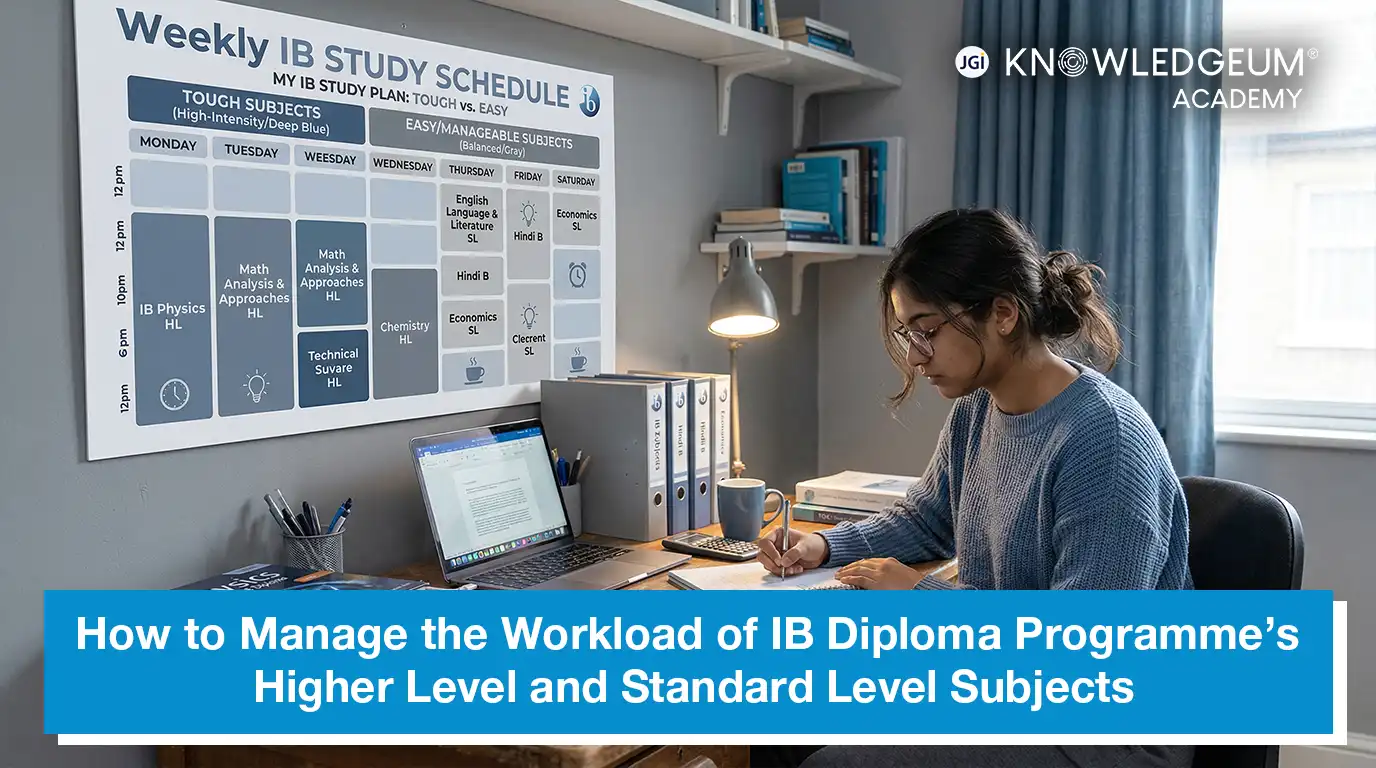
How to Manage the Workload of IB Diploma Programme Higher Level and Standard Level Subjects




 Brochure


Address
No.10, (old 271/A), 1st Main Road


Quick links
© Knowledgeum


 Knowledgeum Experience