Apply Now
27-06-2023

Differences between IGCSE and IB Curriculum 

As you embark on your educational journey, you must make calculated decisions that will influence your academic trajectory and future possibilities. The International General Certificate of Secondary Education (IGCSE) and the International Baccalaureate (IB), two significant international curricula, offer unique approaches to learning. For students who are looking for a holistic learning experience that has a comprehensive structure aligned with contemporary needs, the IB  IGCSE are broad-minded international boards. In this blog, we will look at the differences between these two curricula, giving you valuable insights to choose the right path.

  • Philosophical Underpinnings: When it comes to education, the philosophical framework is at the heart of any curriculum. The approaches taken by the IB and IGCSE programmes differ greatly. IGCSE emphasises subject-specific knowledge while developing a broad understanding of multiple subjects.
    In contrast, the IB emphasises critical thinking, multicultural sensitivity, and holistic learning. The International Baccalaureate seeks to build well-rounded individuals who can succeed in a global setting, with abilities that go beyond traditional topics.
  • Structure and Examination System: Being acquainted with the structure and assessment processes of the IGCSE and IB is critical in selecting the best programme for you. The IGCSE curriculum typically lasts two years and culminates in subject-specific examinations at the end. This structure allows a more focused study of individual subjects.

    On the other hand, the International Baccalaureate (IB) provides a two-year diploma programme in which you study six subjects from multiple disciplines in addition to key components such as the Theory of Knowledge (TOK), Extended Essay, Creativity, Activity, and Service (CAS) activities. This comprehensive approach broadens your perspective and promotes interdisciplinary thinking, helping you develop a well-rounded skill set. Between IB IGCSE, while IB focuses on interdisciplinary learning, IGCSE stresses STEM learning.
  • Flexibility and Subject Choices: A key factor to take into consideration is subject choice flexibility. IGCSE provides a degree of autonomy by letting you select subjects depending on your interests and skills. This allows for a more customised approach to your education, allowing you to focus on subjects that pique your interest. You can choose a combination of subjects that align with your intended field of study or career aspirations.
    The IB Diploma Programme, on the other hand, offers a mandated topic list that includes languages, sciences, mathematics, humanities, and the arts. While there is some flexibility within each subject area, the IB curriculum encourages a well-rounded education that nurtures a variety of knowledge. This can be advantageous if you are unsure of your specific interests and want to explore different disciplines before deciding on a career path.
  • Assessment Methods: The way your progress and achievements are evaluated in IB and IGCSE IGCSE is mostly based on external assessments that assess your knowledge and comprehension of the subject area. The examinations are conducted at the end of the course, and your performance is measured against set criteria.

    The IB curriculum, on the other hand, incorporates internal and external evaluations, such as written tests, coursework, oral presentations, and practical assessments. This multidimensional method attempts to assess not just your knowledge but also your critical thinking skills, research abilities, and capacity to apply information to real-world settings. The variety of assessment methods in the IB programme allows for a more comprehensive evaluation of your abilities and offers opportunities to showcase your strengths in different areas.

Recognition and University Admissions: While choosing a curriculum, it is essential to consider the recognition and university admissions aspects. IGCSE and IB are both internationally recognised and extensively acknowledged by institutions worldwide. The amount of acknowledgement, however, may differ based on the organisation and region. It is worth mentioning that the IB curriculum is highly valued by educational institutions due to its comprehensive approach, which includes the Theory of Knowledge component and the Extended Essay. Higher education institutions appreciate critical thinking and research abilities, which are emphasised in these components.

On the other hand, if you want to specialise in a certain field of study, the IGCSE's subject-specific concentration might be advantageous. The IGCSE allows you to demonstrate a deeper understanding of specific subjects. This is beneficial if you have a clear career path in mind and want to pursue higher education in a specialised field.

The choice between the IGCSE and IB curricula in the world of international education might be difficult. It's critical to examine your abilities, interests, and long-term educational aspirations before making this selection. Consider your preferred learning style, career goals, and the type of education that resonates with you the most. Finally, both, IB and IGCSE curricula lay the foundation for further education and career.

Kick-start your journey to academic success in the best IB and IGCSE schools in Bangalore today!
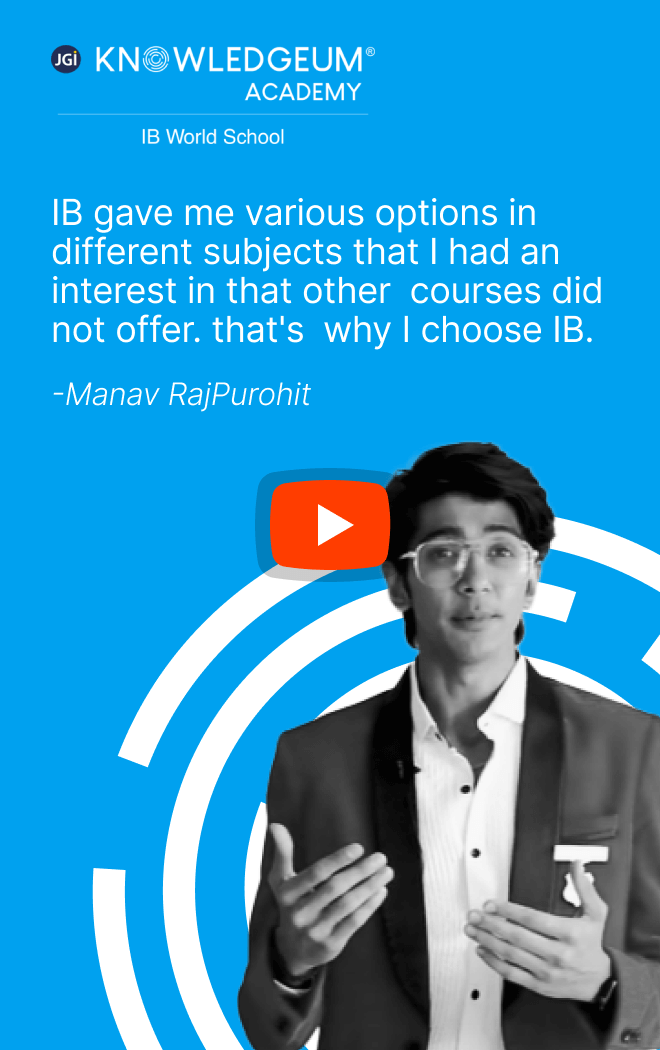


Testimonials


Latest Blogs

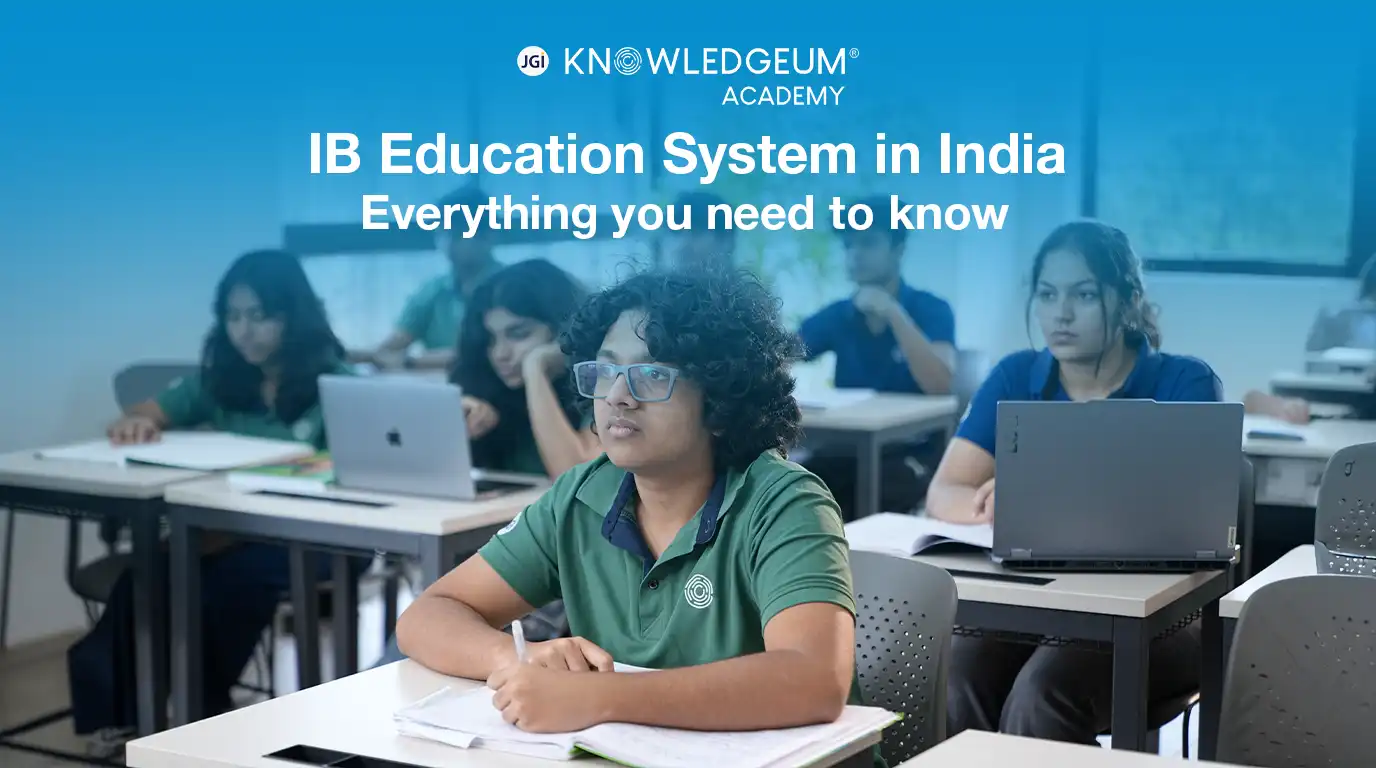
IB Education System in India – Everything You Need to Know

Why Choose the IB Curriculum in 2026? Key Benefits for Indian Students

Top Scholarships for IB Students in India – 2026 Opportunities

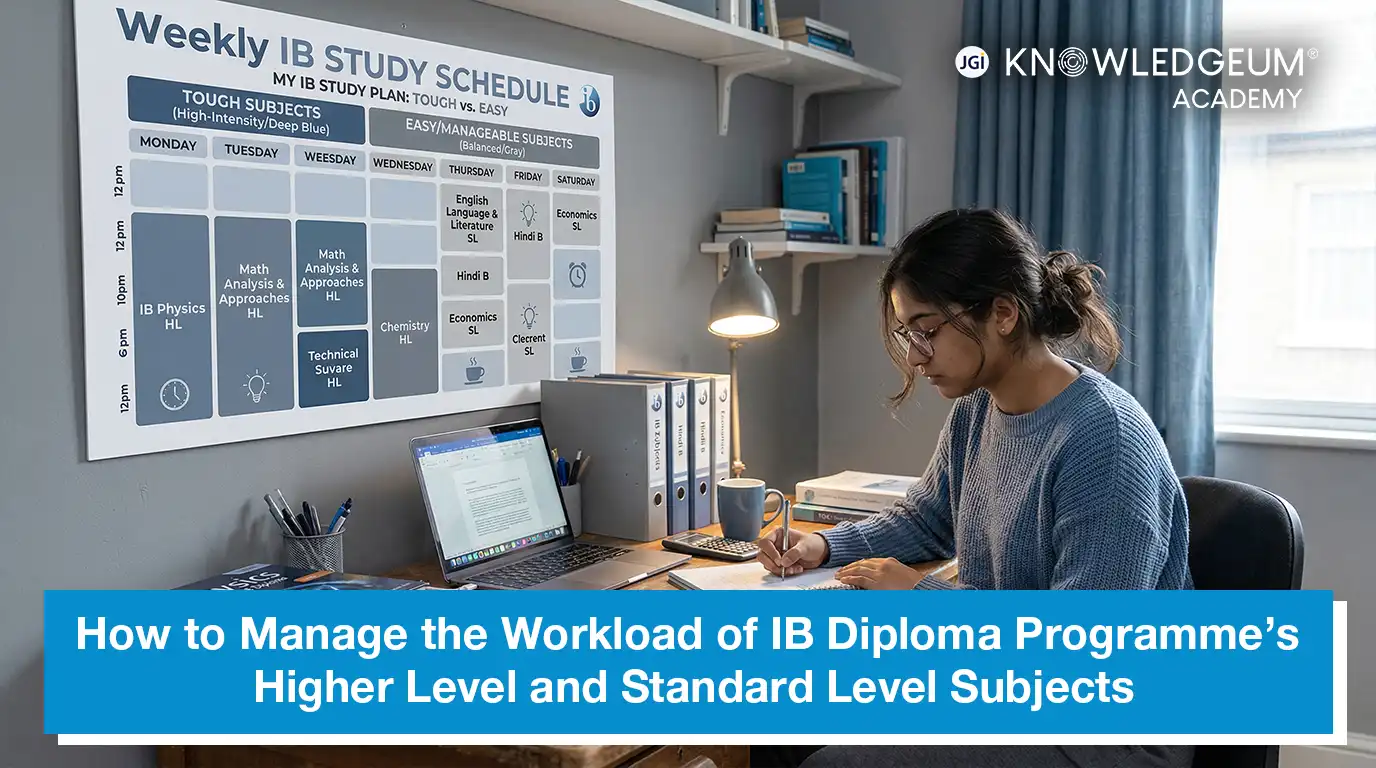
How to Manage the Workload of IB Diploma Programme Higher Level and Standard Level Subjects

How to Choose the Best IB School in Bangalore


Knowledgeumites


Enquire
Now
Brochure
logo logo logo

© Knowledgeum

News
IBDP Results 2025: A Journey of Growth, Discovery, and Achievement
Admissions 2025
A Transformative Journey of Learning and Growth
04-03-2025
The Student Council of Knowledgeum Academy
Applications Invited for
Grade 11 & 12
Event
Knowledgeum Academy Shines at JNMUN IX
17th July 2025
Conexión
June 2025 (Volume 4, Issue 6)
International Student
Kommunique
Edition 1
News
IB Subjects for Engineering: A Guide to Success
News
IB Subjects for Pursuing Medicine in the USA
News
Does Harvard Accept IB Students? A Guide to IB and Harvard Admissions
IBDP 2025 Success Rate
90%
Highest Grade Achieved
41/45
School Average Score
32/45
Knowledgeum Knowledgeum Experience