Table of Contents
| Chitradurga Fort is a historic hill fort in central Karnataka, India, known for its seven concentric stone walls, advanced military architecture, and association with the heroic story of Onake Obavva. |
Chitradurga is one of the 30 districts of Karnataka and a place of historical significance; it is located to the northwest, 200 km away from Bengaluru. It is very distinctive, featuring curious myths, human dwellings dating back to the Stone Age, and ancient and historical sites. One can find numerous ancient temples and monuments nestled between the fortified stone layers of the hill fort.
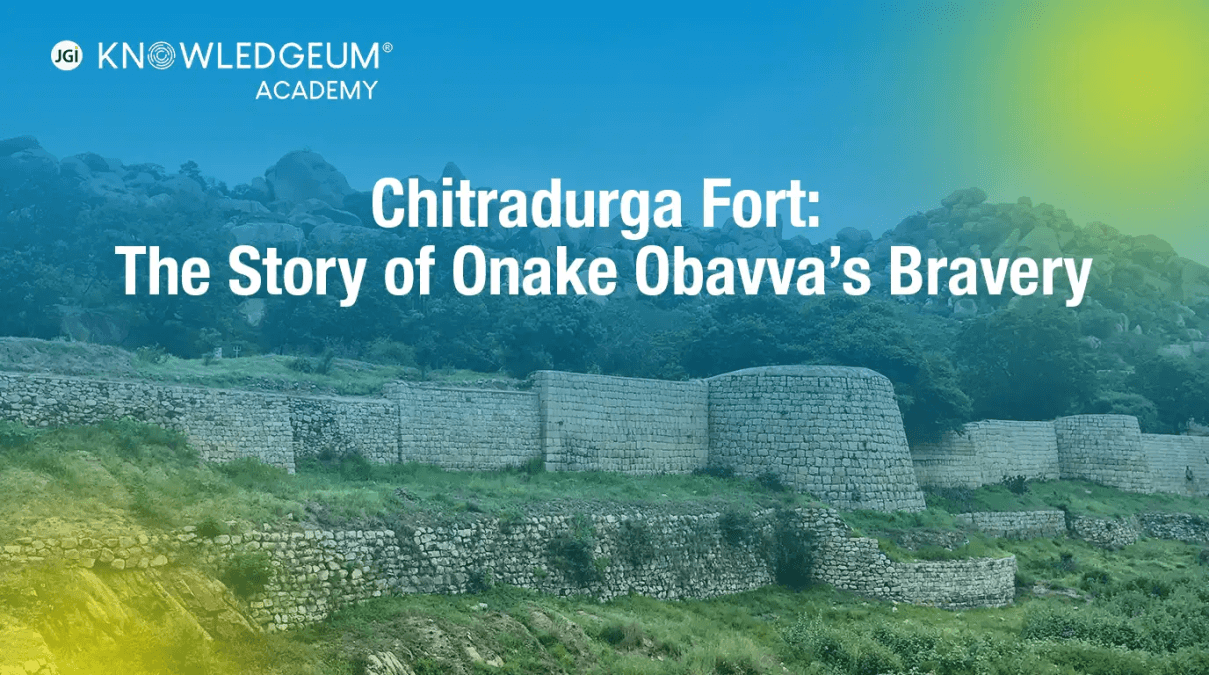
Chitradurga Fort is located in the valley of the Vedavati River in the Karnataka state, India. It is best known for its seven-tiered stone structure. The fort of Chitradurga is the first and foremost monument, locally known as Elusuttina Kote or Kallina Kote. This fort traces its lineage to the times of the Chalukyas and the Hoysalas, ancient kingdoms.
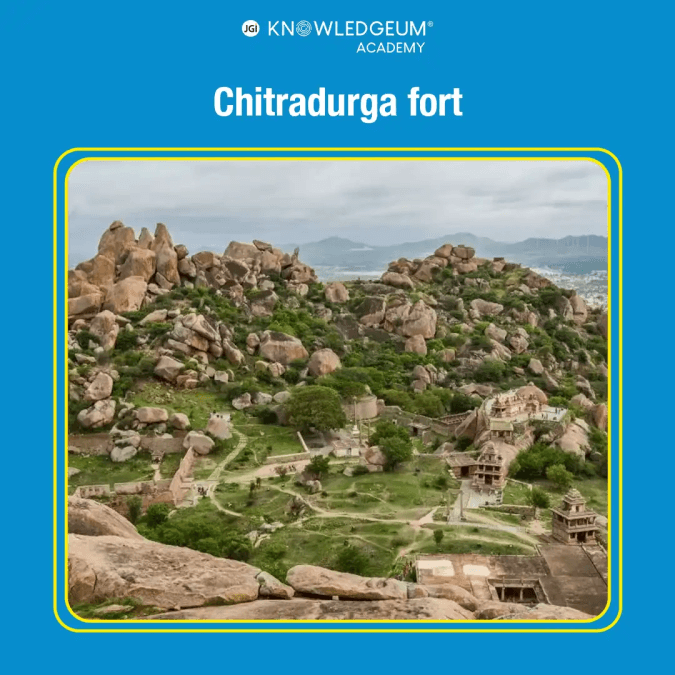
The hilly district of Chitradurga contains many forts and villages scattered across its terrain. It is home to Chitradurga Fort, in the heart of the Deccan Plateau. Historically, the rock edicts issued by Emperor Ashoka reveal that this region was part of the Mauryan Empire dating to the 3rd century B.C.
After the Mauryans' defeat, several royal dynasties established their rule over this territory, including the Rashtrakutas, Chalukyas, and Hoysalas.
However, it achieved prominence as a feudatory state of the Vijayanagar Empire, under the dynastic rule of the Palegars, also known as Nayakas, who were known for their heroic exploits.
In addition to its multi-layered gateways, Chitradurga Fort includes a range of architectural and defensive features such as bastions, watchtowers, secret passages, water reservoirs, and massive stone walls.
Timmana Nayaka, who was a commander under the Vijayanagar Empire, was given the rank of governor of Chitradurga as a reward for his military skills. His rule marked an important moment in the fort’s history.
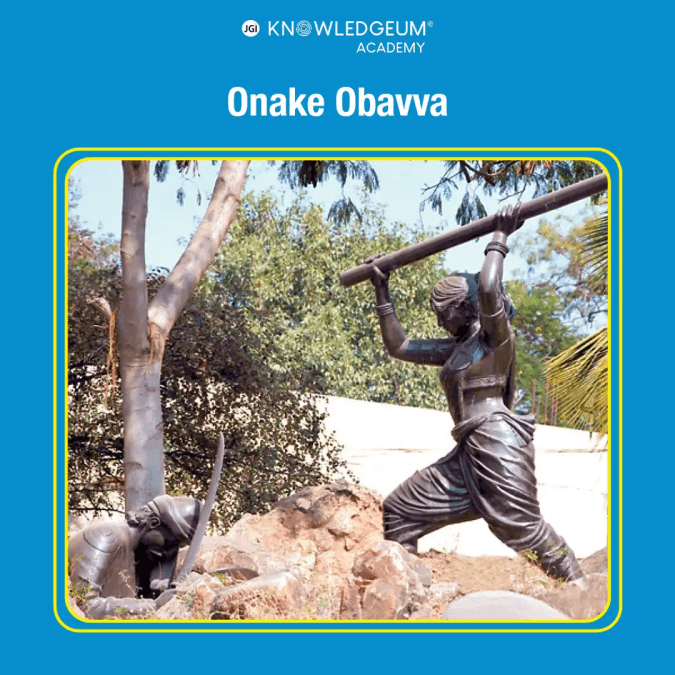
Onake Obavva was an 18th-century woman warrior from Karnataka. She was the wife of Kahale Mudda Hanuma, a soldier and guard at Chitradurga Fort. Obavva showed extraordinary courage by fighting against the invading troops of Hyder Ali single-handedly using an onake (a long wooden club). Onake Obavva is remembered as a prominent personality in Karnataka’s history and folklore.
Even today, people remember Onake Obavva for her role in resisting the invasion of Chitradurga Fort.
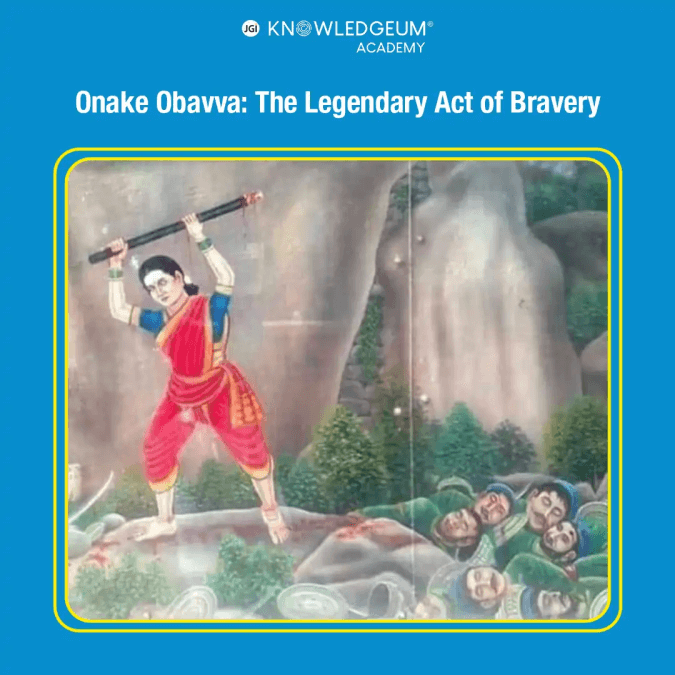
One afternoon, Obavva called her husband, Kahale Mudda Hanuma, who was guarding Chitradurga Fort. After serving the meal, she went to fetch water from a nearby source.
While fetching water, Obavva heard enemy soldiers associated with Hyder Ali’s forces attempting to enter the fort through a small opening, large enough for only one person to crawl through. Obavva rushed back toward the fort to alert her husband. However, as Kahale Mudda Hanuma was still away having lunch, Obavva decided to confront the intruders on her own.
Armed only with a wooden pestle (onake), Obavva struck each soldier as they entered the narrow opening. According to local folklore, she killed several intruders one by one, preventing them from entering the fort.
Shortly thereafter, Kahale Mudda Hanuma arrived and immediately alerted the fort’s army. The soldiers of Madakari Nayaka then rushed in and defeated the remaining invaders. According to some popular accounts, Obavva later lost her life during the confrontation.
Accordingly, the title “Onake” is derived from the Kannada word for pestle, symbolising the implement she used as a weapon during her act of bravery.
| Even today, to the west of the Chitradurga Fort, there is a secret path, which is called the Veeravanite 'Obavva's Kindi'. |
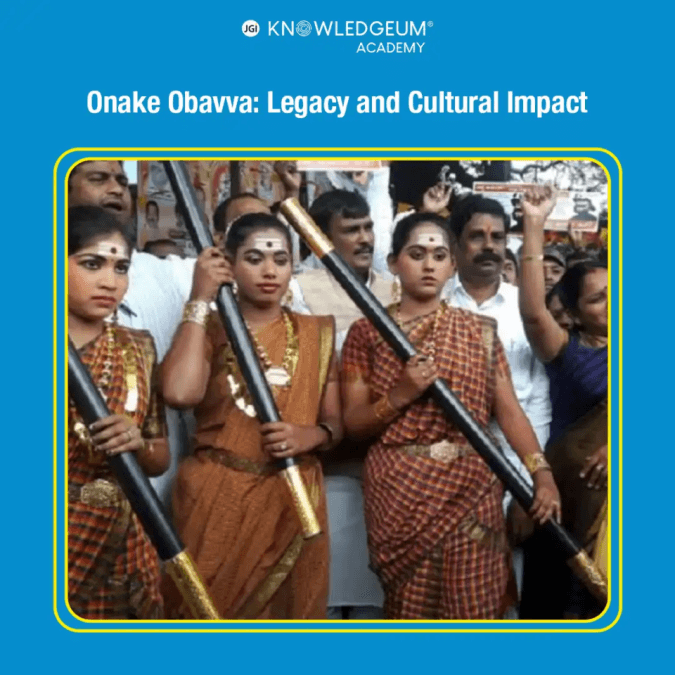
Onake Obavva was a non-professional woman warrior from Chitradurga who played a significant role in resisting the forces of Hyder Ali during the 18th century.
Today, people remember Obavva for the courageous act of defending Chitradurga Fort against invading soldiers.
Obavva’s story demonstrates the importance of protecting one’s country and its people. She remains a powerful symbol of bravery, courage, patriotism, and generosity in Karnataka’s history.
Onake Obavva’s legacy goes beyond her heroic act, which is preserved through
Onake Obavva is honoured for her determination, quick thinking, and strong loyalty to her country. This makes her an enduring cultural icon and an inspiration even today.
In 2021, the Karnataka government formally recognised and promoted the observance of “Onake Obavva Jayanti” on Nov. 11.
Chitradurga Fort is renowned for its Kallina Kote, Ukkina Kote or Yelu Suttina kote, which were built in parts during the rule of Palegar Veer Madakari Nayaka.
In contrast to many other hill forts in Karnataka, Chitradurga Fort features seven concentric fortification layers.
Here are some fascinating facts about Chitradurga Fort
Along with these facts, Chitradurga Fort has a mythological story, which is linked to the Mahabharata.
Hidimba, a man-eating Rakshasa, and his sister Hidimbi lived on the hills of Chitradurga. Hidimba was a big menace to the people of this region. Bhima, the strongest of all the Pandavas, killed Hidimba, thereby restoring peace to the region.
Onake Obavva is remembered as one of Karnataka’s most iconic female warriors and a symbol of courage and resistance. She is often mentioned alongside legendary figures such as Kittur Chennamma, Keladi Chennamma, and Abbakka Rani for her fearless stand against invading forces.
Her actions at Chitradurga Fort played a crucial role in delaying the enemy’s advance, giving the defenders valuable time to respond. This single act of bravery secured her a lasting place in Karnataka’s history and folklore, making her a powerful symbol of Kannada pride and resilience.
Visit our blogs at Knowledgeum Academy and explore more about the legend of Onake Obavva and her heroic stand at Chitradurga Fort.
Chitradurga Fort is a powerful symbol of Karnataka’s history, architecture, and courage. Among its many stories, the bravery of Onake Obavva stands out for its determination, quick thinking, and fearless resistance. Her legacy continues to inspire generations and remains deeply rooted in Karnataka’s folklore and cultural identity.
This is an amazing piece on Karnataka history. Have you heard of Onake Obavva before?
Share your thoughts in the comments below.
Onake Obavva was an 18th-century woman warrior from Karnataka and the wife of Kahale Mudda Hanuma, a soldier and guard at Chitradurga Fort.
"Onake" is a Kannada word that refers to a pestle, a long wooden club traditionally meant for pounding paddy grains.
Onake Obavva Jayanti is celebrated annually in Karnataka, India, on Nov. 11.
In 2021, the state officially began observing the day in honour of her bravery and sacrifice.
Onake Obavva Jayanti is celebrated for her bravery and sacrifice.
Chitradurga Fort is called "Elusuttina Kote", which refers to "Seven-Circled Fort". This name comes from its seven concentric fortification layers, which are designed to strengthen its defence.
Chitradurga Fort is renowned for its meticulous planning in accordance with the warfare techniques of its era.
The Chitradurga Fort was strategically designed to suit the warfare techniques of its time.
Some of the defensive features are
Because of its elevated rocky terrain and a cluster of surrounding hills, the Chitradurga Fort is called a hill fort.












How to Manage the Workload of IB Diploma Programme Higher Level and Standard Level Subjects





 Brochure


Address
No.10, (old 271/A), 1st Main Road


Quick links
© Knowledgeum



 Knowledgeum Experience